Congested Fixtures in England's Lower Leagues Shift Both-Teams-To-Score Dynamics for Live Markets
Clara Walter · Nov 3, 2026
Congested Fixtures in England's Lower Leagues Shift Both-Teams-To-Score Dynamics for Live Markets
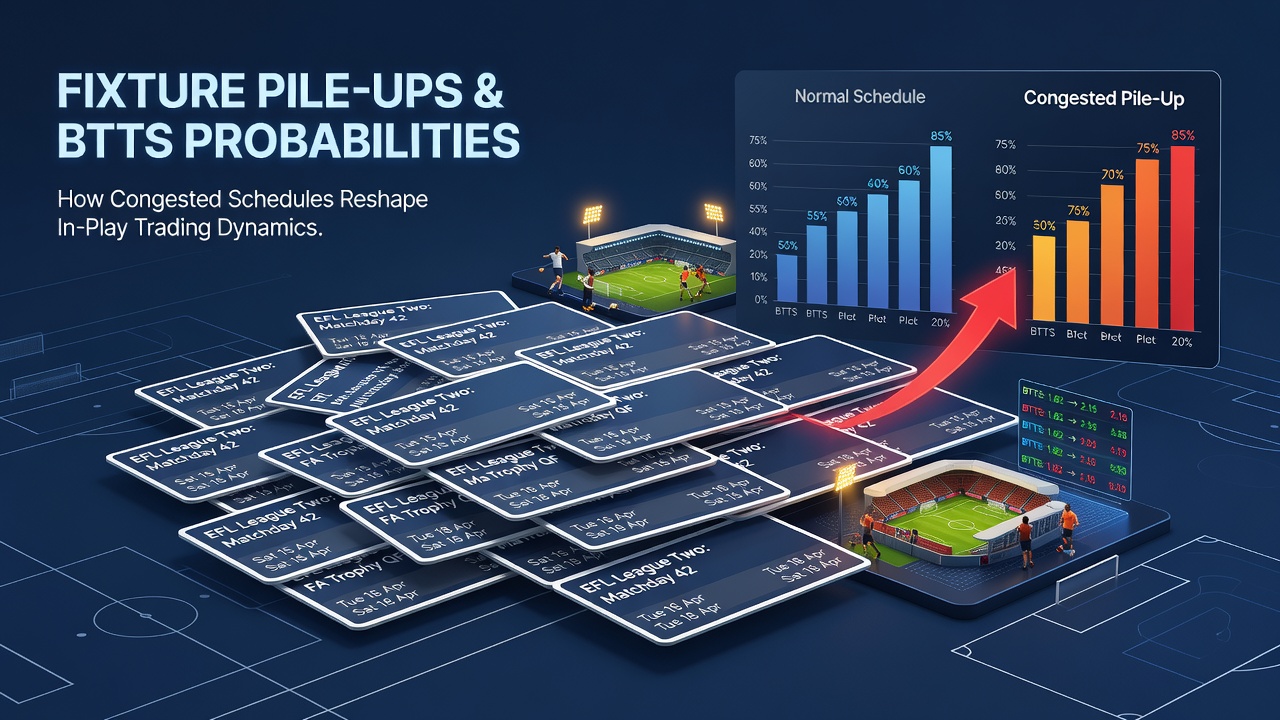
Fixture pile-ups hit League One, League Two and the National League hardest each autumn when cup replays and postponed games stack up behind the regular programme, and data from recent seasons shows these periods alter both-teams-to-score rates in measurable ways. Matches played with less than four days between them produce higher incidences of goals at both ends according to match logs compiled by the English Football League, while teams with fewer recovery hours concede more shots from distance and create more open play in transition.
Observers tracking in-play markets note that the probability of both teams scoring rises steadily once the interval between fixtures drops below seventy-two hours. League Two sides averaging three matches in eight days posted a both-teams-to-score hit rate of 58 percent across the 2024-25 campaign compared with 49 percent in weeks containing only one fixture, figures compiled from official match reports.
Why Recovery Time Matters in the Lower Divisions
Lower-league squads carry smaller squads and rely on fewer specialist staff than their Championship counterparts, so any compression of the calendar quickly shows in physical outputs. GPS data collected by clubs affiliated with the Professional Footballers' Association indicates that total distance covered falls by roughly eight percent in the third match of a congested block, while high-intensity runs decline even more sharply. Defenders cover less ground in the final twenty minutes, leaving space behind the line that attacking midfielders exploit with through balls and cut-backs.
Goalkeepers also face increased workload because shot volume rises when teams play on consecutive weekends plus midweek cup ties. National League clubs that reached the FA Trophy quarter-finals during the 2025-26 season while maintaining league fixtures recorded an average of 14.2 shots faced per game in the congested stretch versus 11.1 shots faced in standard weeks.
Patterns Visible in November 2026
November 2026 brought an unusually dense run of fixtures for several League One sides after a cluster of postponed matches from October storms forced midweek catch-up games. Peterborough United, for example, played five matches in fifteen days and saw both teams score in four of those encounters. Similar spikes appeared across League Two where clubs such as Swindon Town and Newport County posted combined goal tallies above 3.2 per game during the same window.
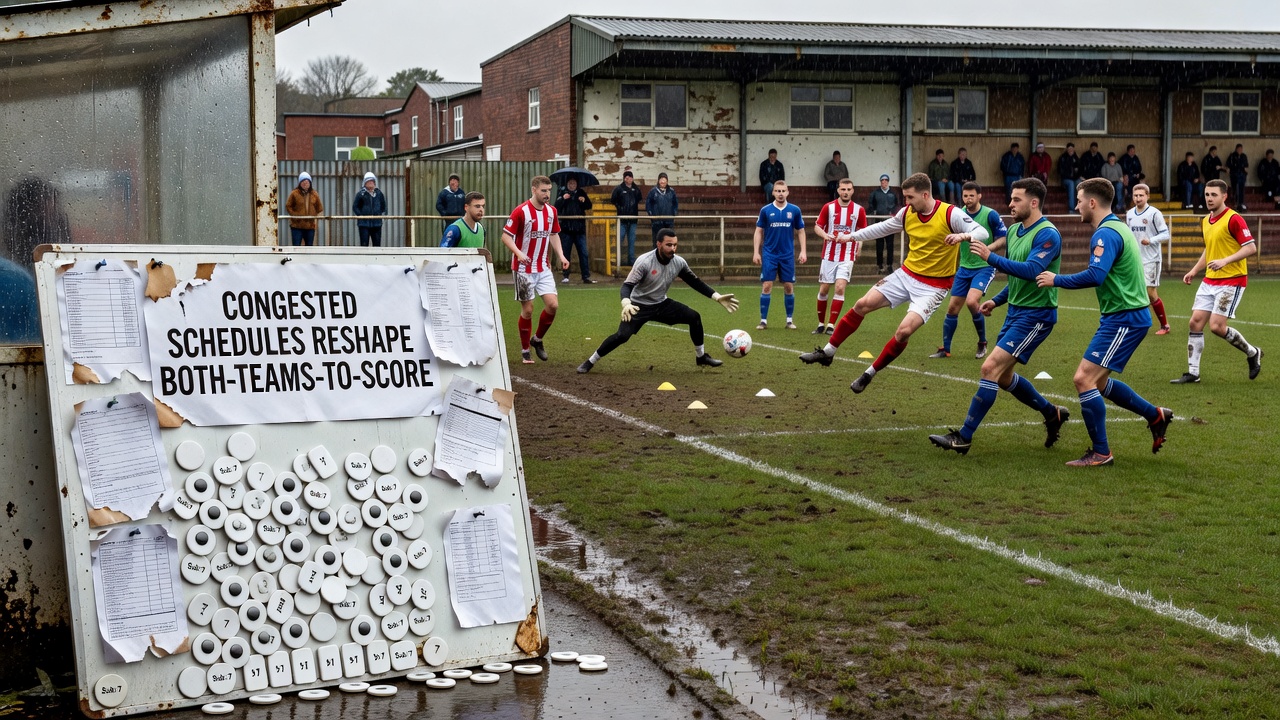
Traders monitoring live odds adjusted their models accordingly. Markets opened with both-teams-to-score priced at 1.95 on average before kick-off in these blocks, yet in-play prices shortened to 1.65 within twenty minutes whenever the first goal arrived early, reflecting the increased likelihood of a response from the opposition.
Statistical Indicators Tracked by In-Play Models
Researchers examining ten seasons of lower-league data found that matches following a three-fixture week produce 0.4 more goals per game on average than those played after a full week of recovery. The extra goals distribute fairly evenly between halves, although second-half both-teams-to-score rates climb faster once fatigue sets in. Corners and shots on target also increase by margins that live platforms register within the first fifteen minutes, giving traders an early signal to enter positions.
Key metrics that correlate with elevated both-teams-to-score outcomes during pile-ups include:
- Teams averaging under 48 hours recovery showing a 12 percent rise in shots conceded from outside the box
- Full-backs completing 15 percent fewer progressive passes, opening channels for counter-attacks
- Goalkeepers recording lower save percentages on shots taken after the 70th minute
These indicators appear consistently across League One and League Two datasets released by the English Football League and allow systematic tracking without reliance on subjective scouting notes.
Case Examples from Recent Seasons
One League Two club that contested three cup ties inside ten days during the 2023-24 winter period conceded 11 goals across those matches, eight of them coming after the 60-minute mark. Opponents scored in each game, producing both-teams-to-score results in every fixture. A parallel pattern emerged in the National League South where sides involved in replayed FA Trophy ties recorded both-teams-to-score outcomes in 61 percent of subsequent league matches played inside four days.
Coaches have responded by rotating central midfielders more aggressively and instructing full-backs to tuck in earlier, yet the underlying physical load remains high because substitutes also accumulate minutes across the block. Data released by the Football Association's medical committee shows that lower-league players miss 2.3 additional training sessions per congested month compared with standard periods, reducing tactical cohesion on the pitch.
Conclusion
Fixture congestion in England's lower leagues produces measurable changes in both-teams-to-score probabilities that in-play traders monitor through recovery intervals, shot volume trends and second-half goal timing. Official match data and player workload figures confirm that shorter gaps between games correlate with more open play and higher combined goal tallies. Those patterns hold across League One, League Two and the National League, giving market participants concrete statistical anchors rather than anecdotal observation alone.