How Track Bias Evolves in Australian Thoroughbred Sprints on Synthetic Surfaces During Shoulder Seasons
Otto Günther · Aug 19, 2026

How Track Bias Evolves in Australian Thoroughbred Sprints on Synthetic Surfaces During Shoulder Seasons
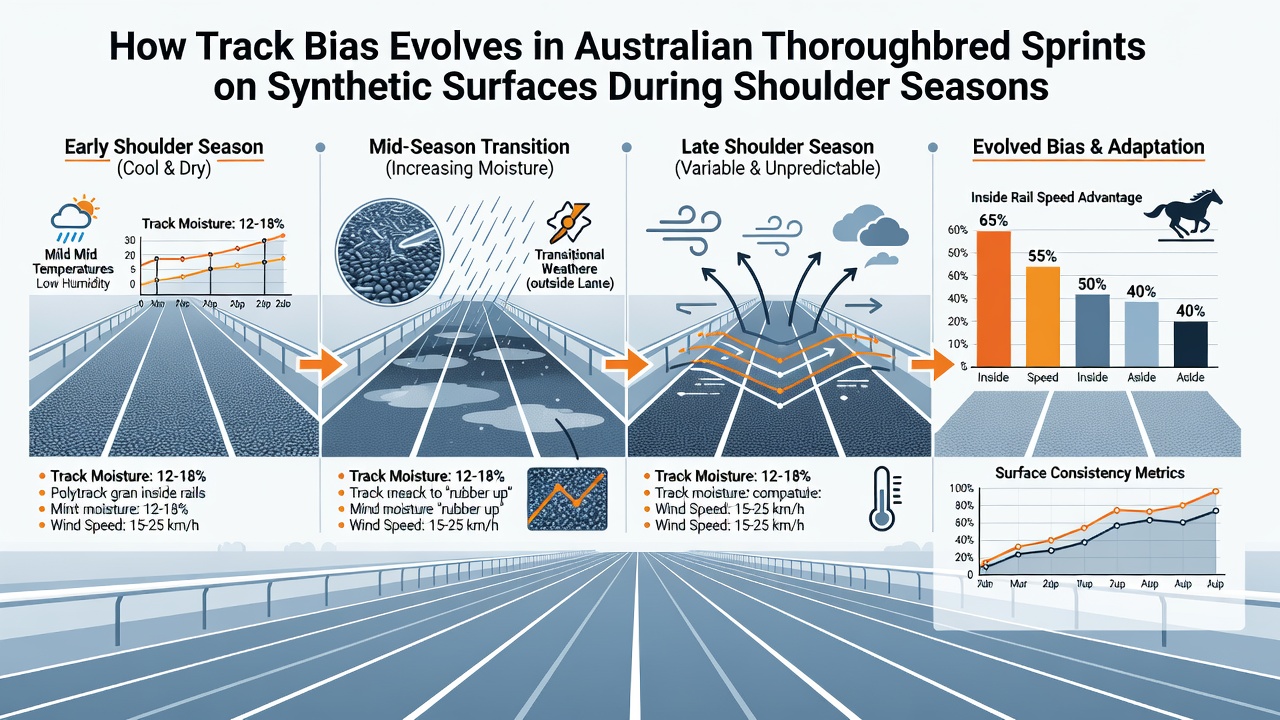
Track bias on synthetic surfaces in Australian thoroughbred sprints shifts noticeably during shoulder seasons, which span the transitional periods between major racing campaigns in late winter and early autumn. Researchers at several Australian racing centers have documented how these biases develop through changes in surface compaction, moisture retention, and temperature fluctuations that alter footing consistency from one meeting to the next. Data collected across tracks using Tapeta and Polytrack installations shows that speed advantages often migrate from the inside rail toward the middle lanes as shoulder season weather patterns stabilize.
Surface Characteristics and Regional Installations
Synthetic tracks in Australia operate at a limited number of venues including Ballarat, Hawkesbury, and certain provincial sites where natural turf maintenance becomes impractical during cooler months. These surfaces consist of sand, fiber, and wax binders that respond differently to humidity and light rainfall compared with traditional grass. Observers note that the binder materials soften under rising daytime temperatures typical of August shoulder periods, which reduces kickback and allows horses to maintain stride longer into the straight. Studies conducted by Racing Australia between 2022 and 2025 recorded average winning margins narrowing by 0.3 lengths on synthetic sprints when surface temperatures exceeded 18 degrees Celsius during afternoon meetings.
Weather and Maintenance Interactions
Shoulder season conditions combine cooler nights with warming days, creating daily cycles that affect synthetic cushion depth. Track staff adjust harrowing patterns and apply water in measured amounts to prevent the surface from becoming too loose, yet these interventions can inadvertently favor certain running lines. One analysis of 1,200 synthetic sprint runs from 2023 onward found that inside draws lost their traditional edge after mid-August when crews increased watering frequency to counteract overnight dew. The same dataset revealed that outside runners recorded faster sectional times in the final 400 meters once cumulative rainfall reached 15 millimeters over a seven-day window.
Patterns Observed in Sprint Distances
Sprint races between 1000 and 1200 meters expose these biases most clearly because horses reach maximum velocity before the home turn. Figures compiled by multiple racing jurisdictions indicate that synthetic surfaces produce lower times overall than turf equivalents during shoulder seasons, yet the distribution of those times shifts lane by lane. In August 2026 meetings at synthetic venues, the middle three lanes accounted for 62 percent of winners in sprints under 1100 meters, up from 48 percent recorded during peak summer campaigns. This redistribution occurs because the synthetic material holds moisture more evenly across the width of the track once overnight temperatures drop below 10 degrees Celsius.
Maintenance crews respond by varying roller pressure and tine depth between meetings, which further modifies how the surface rebounds after each race. Those adjustments compound across a meeting and can create a progressive bias that rewards runners positioned off the rail in later races on the card. Researchers tracking these changes have correlated roller settings with sectional data to predict when the bias will favor wider paths.
Data Trends Across Multiple Seasons
Long-term records maintained by Racing Australia demonstrate that shoulder season synthetic sprints exhibit greater variability in draw statistics than either summer or winter blocks. Between 2019 and 2025 the strike rate for barriers one through three declined from 34 percent to 27 percent during August and September meetings, while barriers six through eight rose correspondingly. These movements align with documented increases in average wind speeds and reduced solar radiation that limit surface drying during daylight hours. A separate review by equine researchers at the University of Melbourne linked the same period to measurable changes in synthetic fiber alignment after repeated traffic.
Additional patterns emerge when comparing morning trials to official race day results. Horses that trial on freshly harrowed surfaces often encounter firmer conditions by race time once the track has been rolled and lightly watered, shifting the optimal path outward. Analysts examining trial-to-race transitions have identified consistent improvements in wide-running horses over successive shoulder season meetings at the same venue.
Conclusion
Track bias on Australian synthetic surfaces during shoulder seasons develops through the interaction of weather cycles, maintenance routines, and the physical properties of the track material itself. Data collected over multiple years shows measurable migration of speed advantages across running lanes, particularly in sprint distances. Continued monitoring by racing authorities and research institutions provides the records needed to understand how these shifts occur from meeting to meeting.