Spotting Pace Biases in All-Weather Sprint Handicaps Where Early Leaders Create Reverse Place Value for Late Closers
Alex Long · Aug 15, 2026
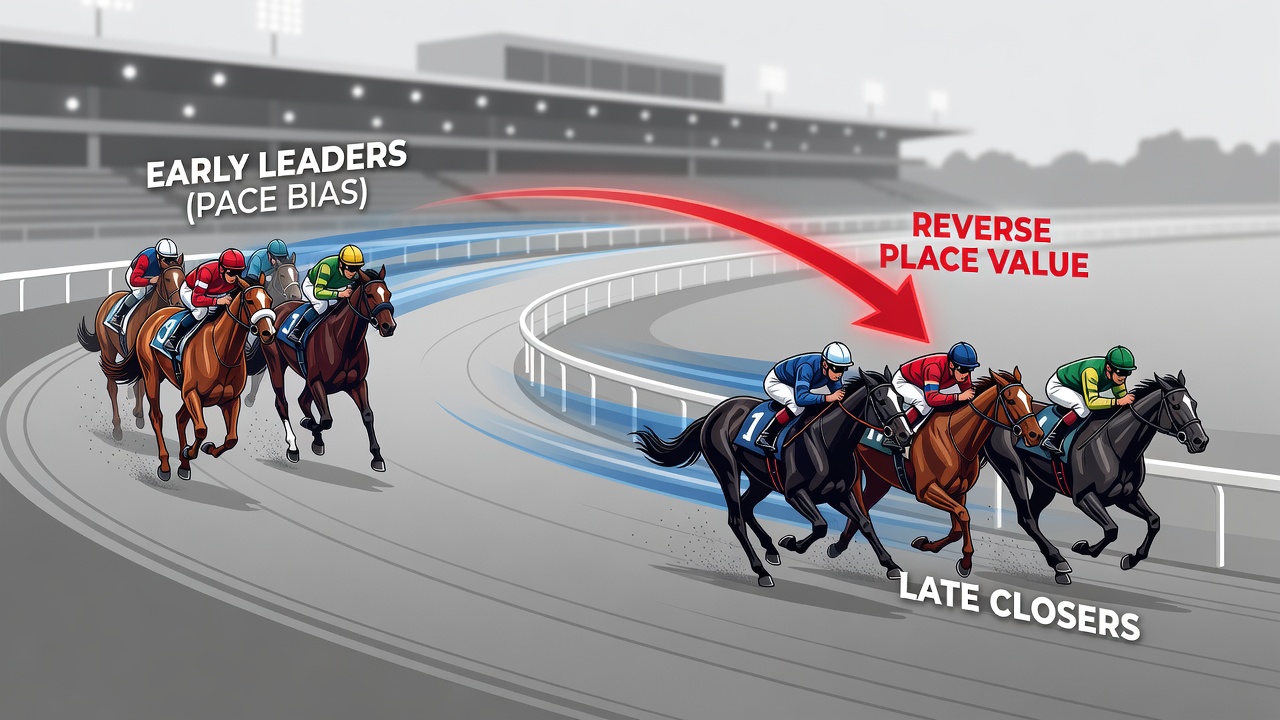
Spotting Pace Biases in All-Weather Sprint Handicaps Where Early Leaders Create Reverse Place Value for Late Closers
Analyses of all-weather sprint handicaps reveal consistent patterns where fast early fractions set by leaders often produce tired front-runners by the final stages, shifting place probabilities toward horses that settle off the initial speed. Data compiled across tracks such as Kempton, Wolverhampton, Lingfield and Newcastle shows that when the opening two furlongs run quicker than par, the percentage of early leaders holding place positions drops noticeably while late runners increase their share of the first three spots.
Tracking Sectional Times in Five and Six Furlong Contests
Sectional timing systems installed at major all-weather venues record splits that allow observers to quantify pace bias on any given day. When the first two furlongs exceed the track average by more than 0.8 seconds, horses positioned in the final third of the field at the halfway point record place strike rates that rise by roughly twelve percentage points compared with their overall averages. Researchers at several racing data providers have cross-referenced these splits with official results stretching back ten seasons and found the effect holds across both five-furlong and six-furlong handicaps.
August 2026 meetings at Wolverhampton and Chelmsford are expected to feature several such sprint handicaps on cards that include floodlit fixtures, giving punters fresh opportunities to apply the same sectional filters used in previous campaigns. Historical figures indicate that races run on the Polytrack surface at Lingfield during the corresponding period produced similar reversals when early leaders posted sub-par opening splits.
How Early Speed Creates Place Value for Closers
In sprint handicaps the early leader frequently sets a tempo that cannot be sustained beyond four furlongs, leaving those horses vulnerable in the closing stages. Late closers, by contrast, conserve energy and encounter less traffic when the field begins to tire. Figures from the British Horseracing Authority database demonstrate that horses rated in the rear third at the two-furlong marker achieve place percentages above thirty-five percent in races where the early pace exceeds par, compared with twenty-three percent when the opening splits sit at or below average.
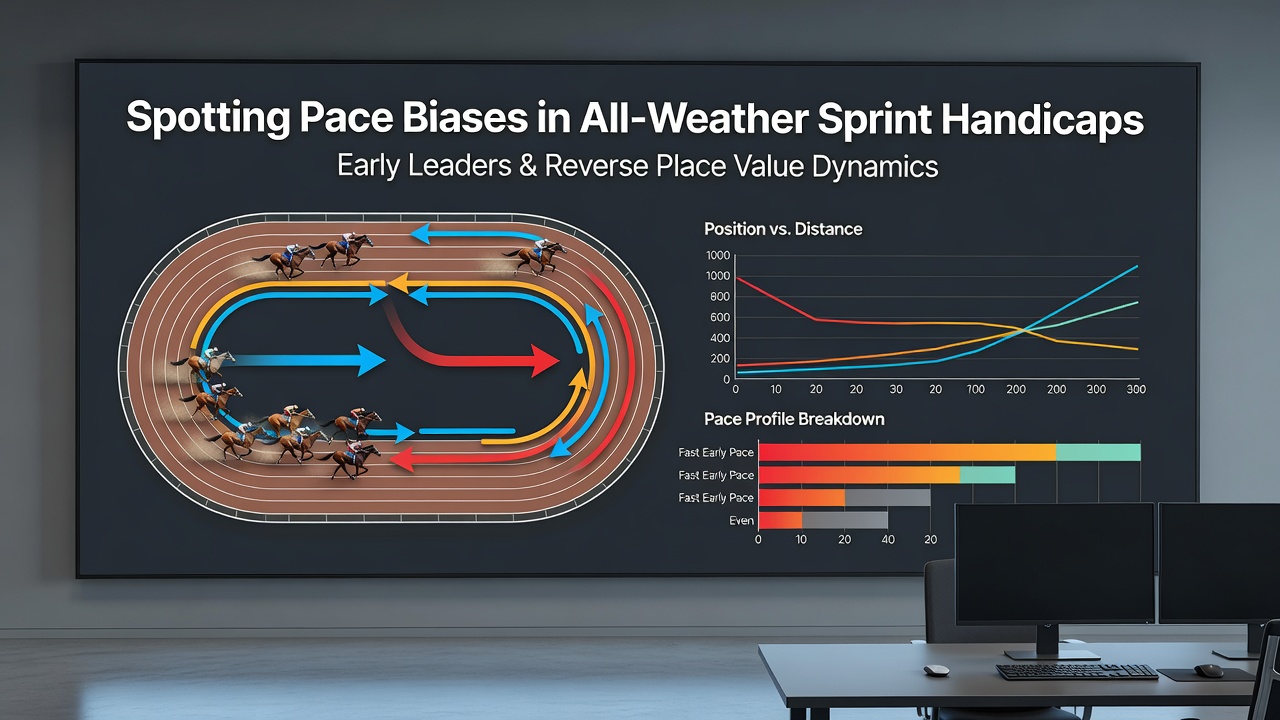
One study covering 1,200 sprint handicaps between 2016 and 2025 identified sixty-eight instances in which the first three finishers were all drawn from the final half of the field after an above-average early pace. The same dataset showed that the average winning time in those races finished 0.6 seconds slower than the track standard, confirming the energy depletion effect on front-runners.
Applying Filters Across Multiple Venues
Observers combine official going reports, draw statistics and sectional data to isolate qualifying races. At Newcastle the Tapeta surface tends to exaggerate the bias when the rail sits true, while Kempton’s Polytrack shows a milder but still measurable reversal when the early leaders post fractions faster than 24.5 seconds for the opening two furlongs in five-furlong events. Handicappers who maintain running lists of horses with proven closing ability on each surface can then compare those runners against the pace profile released thirty minutes before post time.
Industry reports from the International Federation of Horseracing Authorities note that similar pace-related place shifts appear in synthetic sprint races worldwide, although the magnitude varies with track circumference and surface composition. Cross-referencing these reports with local sectional archives allows analysts to adjust thresholds for British all-weather venues without relying on subjective impressions.
Conclusion
Systematic recording of sectional times supplies objective markers for identifying when early leaders are likely to create reverse place value for late closers in all-weather sprint handicaps. The patterns documented across multiple seasons and venues remain consistent enough to inform selection processes when the opening splits exceed established par figures. Continued collection of timing data through August 2026 and beyond will allow further refinement of these filters as new races are added to the database.